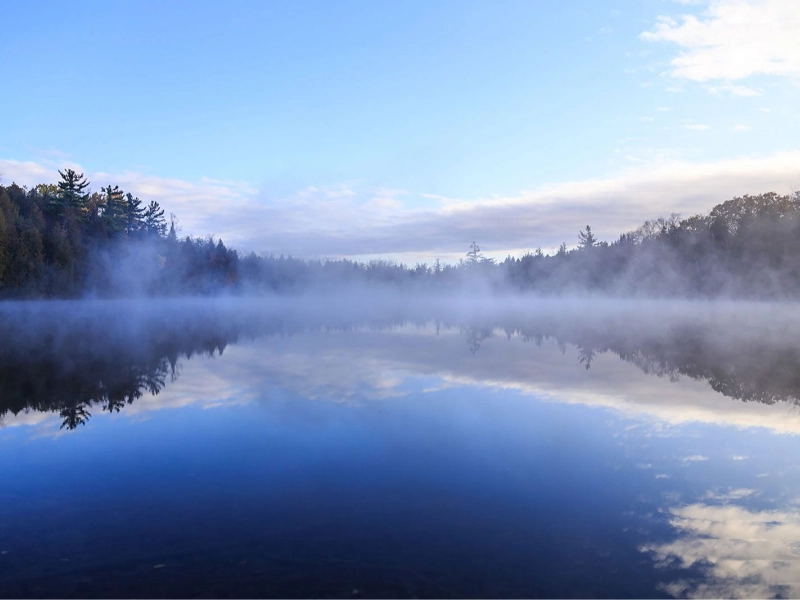
Sixteen linked lakes in the Plitvice Lakes system highlight different tones of blue and green. These lakes are well-known for their unusual development process whereby travertine barriers created by calcium carbonate deposits constantly change the lake system. Different mineral compositions and the presence of specific microbes cause the hue of the water to vary throughout lakes. At a pace of roughly 1 centimeter every year, the intricate interaction between water, limestone, and moss generates new travertine formations, therefore altering the appearance and layout of the lakes. Maintaining water quality and supporting the varied animals depending on these lakes depends on the surrounding forest ecology. While the whole system provides a living laboratory for researching karst water systems and their ecological effects, scientific investigations have recorded how the chemical makeup of the lakes varies annually, therefore influencing their color and the rate of travertine development.