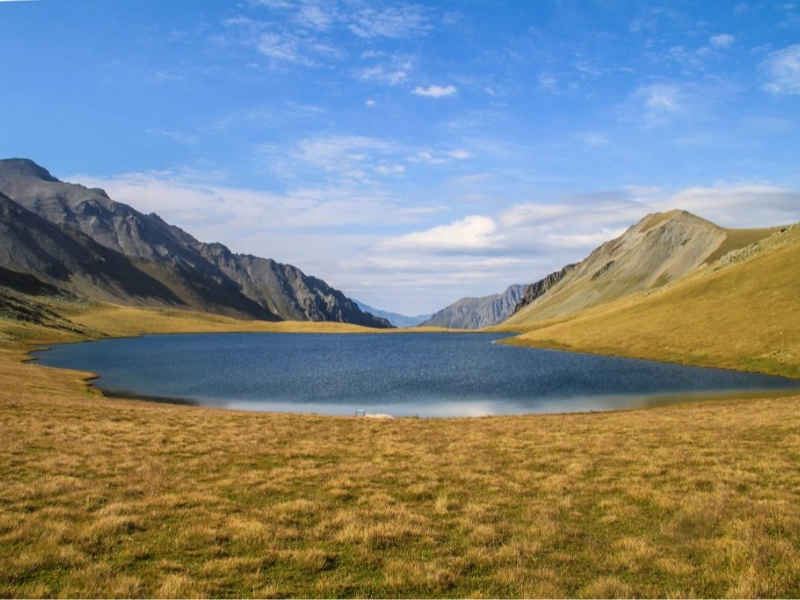
From steel grey to vivid azure blue, this volcanic crater lake changes colour significantly all year long. Different water temperatures influencing the formation of calcite crystals in the water produce color changes. The depth of the lake and the underlying limestone geology help to explain its unusual chemical makeup and color-changing qualities. Maintaining the lake's water level and mineral concentration, underground aquifers feed it through a sophisticated network of sinkholes and caverns. Studies have indicated that although the lake's remoteness from surface water sources helps preserve its purity, its water changes entirely every ten years through a natural filtration process. With the lake itself occupying one of numerous extinct volcanic craters defining the area, the surrounding volcanic terrain offers evidence of the geological history of the region.